

So, Are You Working Class?
A listener offers reflections on Mary Metzger's signature Weld Said question (Submitted by Nicole Riner)


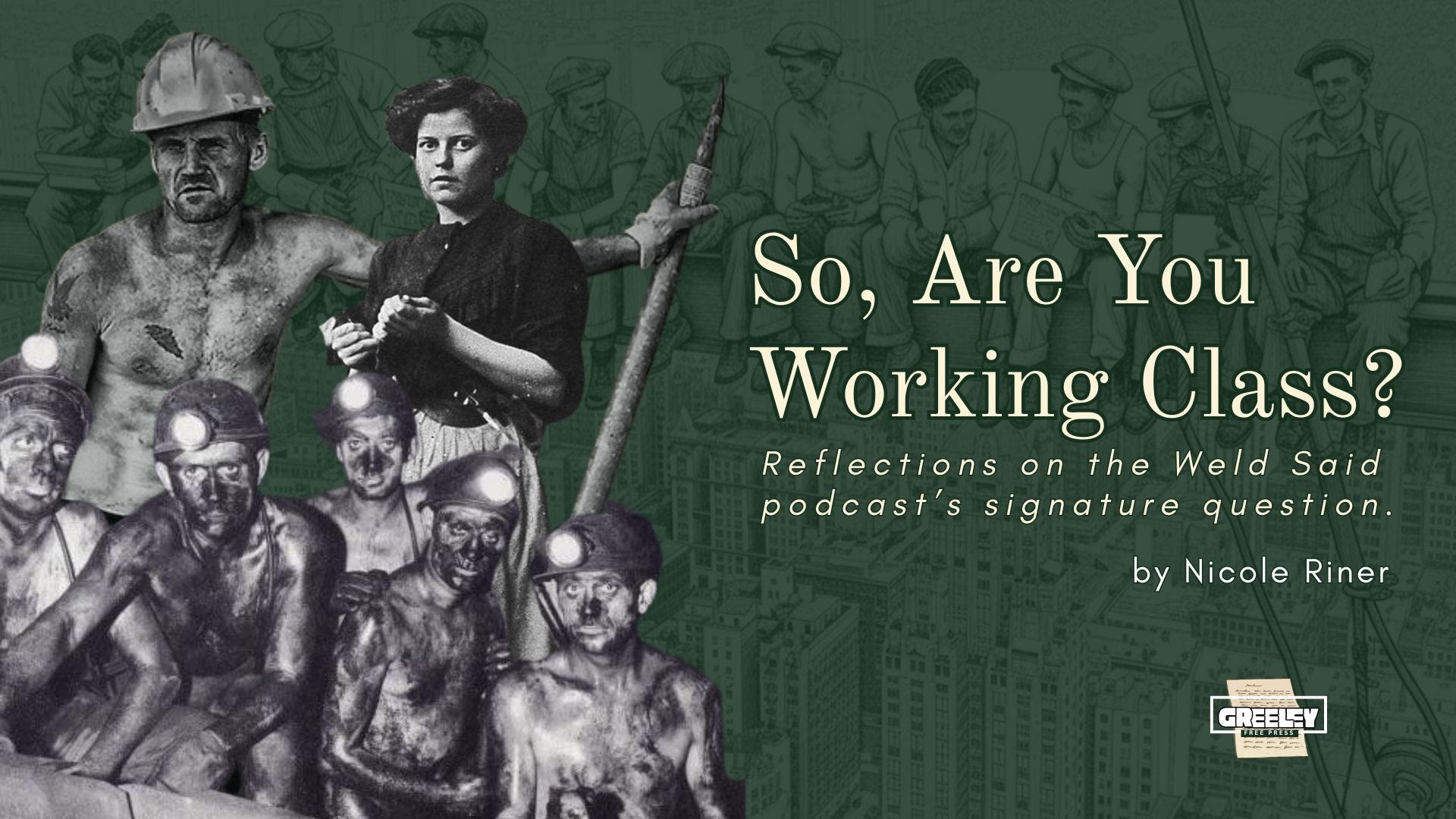
I just love Weld Said—podcast host Mary Metzger’s gently spoken but penetrating questions asked of guests who have generously agreed to the vulnerable position of being publicly interviewed. I feel a little thrill every time a new episode appears in my podcast app.
But the one aspect of this show that has vexed me is the perpetual twofold question, asked of each guest: “What do you think working class is, and do you identify as working class?”
I have felt like it’s almost irresponsible, as there’s never any follow-up to whatever ridiculous thing the guest says.
In one episode, a guest said yes, he believes he is working class; he works with his hands. In almost the same breath, he then referenced his au pair, pausing to thoughtfully ask the host if she knew what that was. Another guest emphatically declared that we are all working class if we have jobs. This from a well-to-do woman with an extensive education and a former job in the corporate sector. I wanted to fucking scream.
But there’s got to be a correct answer, right? A reputable, official definition, maybe from a sociologist or venerated-but-controversial economist from the middle of the last century?
I’m always in my car, driving the 92 miles to my job (just happy to be here!), listening, and I always make a mental note to do some research on the term.
Wikipedia says, “Most common definitions of ‘working class’ … limit its membership to workers who hold blue-collar and pink-collar jobs, or whose income is insufficiently high to place them in the middle class, or both.” The Center for American Progress defines it as “workers without a four-year college degree.” The National Committee to Preserve Social Security and Medicare says younger people and socialists use the term to denote anyone who has to work for a living.
I guess everybody’s right.
So now I think I’m starting to understand Mary’s commitment to asking this question: it’s a kind of litmus test.
What are your attitudes about education, socioeconomic status, relationships to labor? Do you think you’re an Average Joe or better than those around you? Do you think any of this matters and if so, how?
And it’s a private litmus test for the listener too: what do you think of the guest’s answer?
I come from pretty humble roots, but I’ve never known how to categorize myself. My dad went to college, but he was a drastically underpaid schoolteacher on the south side of Chicago. We didn’t have a lot of money, but he was educated. So, what is that?
I went to college—lots of it—thanks to generous, need-based government funding and talent-based scholarships that were available back in the 90s. I majored in arts and humanities and earn less than most entry-level high school teachers in Wyoming.
I feel supremely uncomfortable around my colleagues, whose families were better off than mine growing up, and I most often relate best to those with less education than me, despite the fact that I work in academia.
My frustration with Mary’s question is really about my own class issues, perhaps laced with the guilt of having been lucky enough to pursue my interests and create meaningful work for myself in adulthood.
I want to think of myself as working class, but I’m probably kind of… not.
Some guests on Weld Said seem not to want to call themselves working class. Is that a status issue? Those who do really don’t seem to fit the general vibe; is that a desire to be relatable?
And what does the title “working class” mean if it can mean anything at all?
In this day and age, after a solid 50 years of a shrinking middle class and at least 20 years of hearing “affordable higher education” as an oxymoron, what use are these divisive terms?
The average American under the age of 65 has a median bank account balance of $8,000 across checking, savings, and money market accounts. That’s a financial cushion which could so easily be obliterated by one medical emergency.
I don’t know what class that implies, but it’s a painful truth more of us have in common than we realize.
And if you pull on that thread, perhaps the entire fabric of this whole system of socioeconomic categorization unravels.
Maybe that was the point of the question all along.
 | A guest post by
|